
Dart frog soil update and experiece

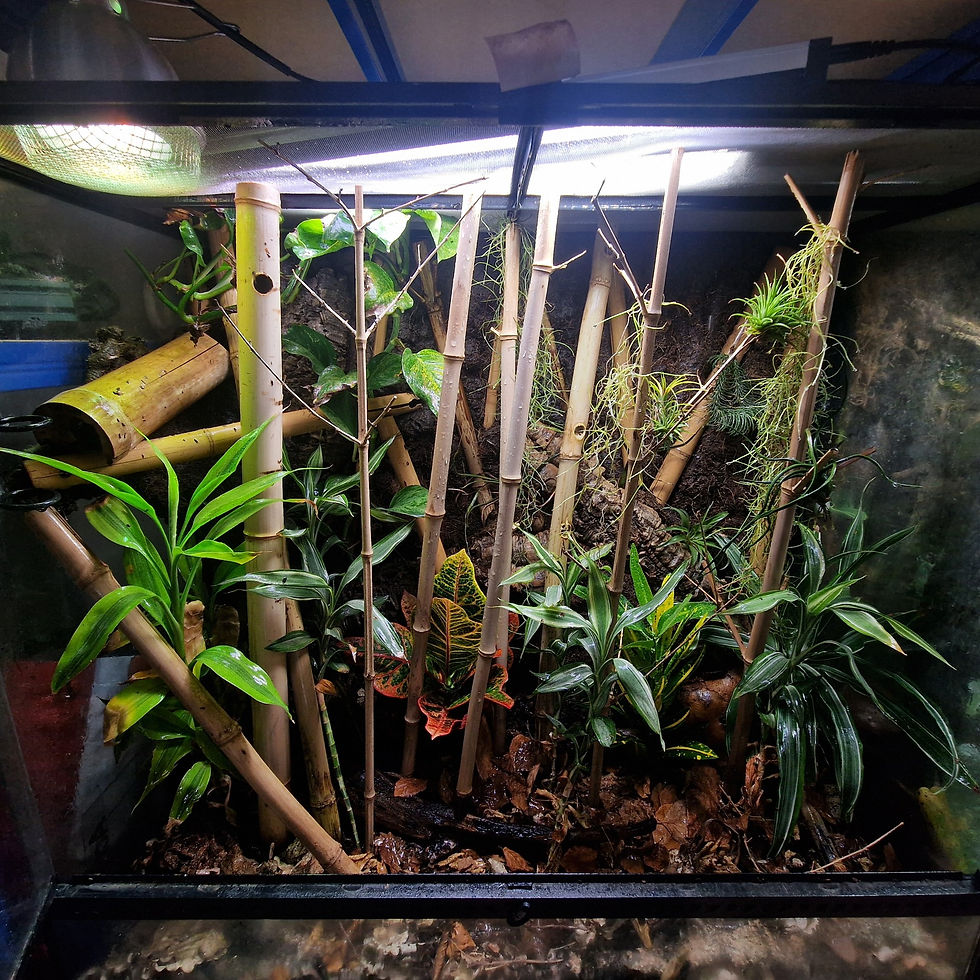
So far the dart frog soil has been very successful! It has showed vastly improved drainage alongside significant growth in all the plants within it. The water area with the clay surround has also proven to hold strong so far and allows easy access for draining but also an area for the frogs to sit and potentially absorb minerals from the clay as was planned when making the substrate.
The cyclanthes in particular have shown appreciation for the red clay soil with the dicranopygium cuatrecassassianum pushing out new leaves regularly.
Below are some photos of the process I went through with gutting the soil from the old tank. I also swapped out the clay drainage balls for filter foam which also appears to have been very successful aiding in the drainage nd also reducing the overall weight of the terrariums. The photo of the soil is the special mix from the Begonia Ladies which I will attach some information written by them regarding the soil below. I mixed the soil with lumps of the clay to add to the desired texture and soil composition.
Hopefully the summary below will help you understand this project and it sums up alot of the ingredients and methods used. The main area I notice is that with the goo and the soil there is an addition of redart clay to replicate South American rainforest soil and a few other components. It has been an incredible research project.
Wise words from Ash the soil wizard:
Working with Arun, we shared a singular vision: to create an authentic environment that encourages natural behaviors and enrichment for dart frogs. Their wellbeing was the core of every decision.
The Inspiration: The Forest Floor:
We began by looking at the frogs' wild habitats - specifically the clay banks found near streams. Since clay baths are an established part of frog care, this became our starting point. To recreate the clay banks, I adapted my signature sculpting blend, "The Goo."
By mixing bentonite for stickiness and coco coir for aeration with vermicast for bioactivity and nutrition, I create a base that adheres to glass and other media and holds its shape. To give this a frog-specific boost, Arun tried various ratios of iron-bearing red clay until we found the optimal texture for sculpting realistic stream banks.
Developing a Bioactive Substrate:
While "The Goo" is perfect for backgrounds and waterlines, a floor substrate requires a different architecture. I typically use a mix of coco coir, orchid bark, pumice, akadama, leaf litter, vermicast, sphagnum moss, biochar, and mycorrhizal fungi to ensure consistent moisture, drainage, nutrition and root health in terrariums.
To tailor this for Arun's project, we used my terrarium mix as a base and integrated "The Goo" until the texture felt authentic to a damp stream margin. The result is a richer, heavier substrate than a typical terrarium mix, but one that should perfectly support the specific plants and moisture levels these frogs require.
I can’t wait to see this incredible ecosystem establish itself and grow!

A great read. So interesting to see it both improved the plants and frogs health. Well done to the pair of you for managing to do this Kudos👏🏽